

We live in an age where our achievements or status have become our second skin, the garments of choice we now drape ourselves with. From posting about our new job, our new work position, our latest: opinion, vacation, yoga retreat, to the new Rare Beauty lipstick we bought last week, we announce it all to the world like Rafiki introduces Simba to the Pridelanders. Why, happiness itself has become a commodity today, sold via content through channels like influencers and gurus, all working towards building their own ‘personal brand.’
And if in these wild times, one crosses paths with a guileless person who says ‘I wish to be happy,’ upon being asked about their 5 year plan, you’d think they grew up but never stopped believing in Santa Claus!
Ironically, amidst all the share-worthy ‘life updates’ we put out, there is more and more online chatter about; seeking happiness, going through anxiety, feeling stressed and isolated, burnout at work, so much so that over the past few years, mental health has become one of the biggest talking points across the world.
Are we then missing something? Is sharing our lives online with people not ‘connecting’ us enough? Is our dream job falling short of making us happy? What is true happiness?
On a family trip to Bhutan some years ago, I not only found the lost pieces of my own puzzle, my life, but also found answers to these perennial questions we often ask ourselves.
The moment I sat in the DrukAir flight from Delhi to Bhutan, a swarm of memories came to the fore, from a time when I lived there, 17 years ago. This family vacation, apart from being long overdue, was a pivotal one — I wasn’t merely visiting a place, but my childhood.
At the turn of the century, Bhutan was home, given my father’s government job. It was a time when life was simple, effortlessly. As a child, happiness meant — playing on the rocks, eating uncooked Wai Wai, collecting gooseberries in gumboots, watching Thief of Baghdad and the latest Bollywood movies (we didn’t have access to a lot of them) on our tiny tv set, taking long walks on the squiggly mountain roads, and running wild in the fields till my heels ached.
These simple things that spelled happiness for me were now long gone, dissolved without a trace, like salt in water, and replaced with the realities of life — finding a job, paying rent, marriage, health, and the other bits that make up ‘adulting.’ Standing at the threshold of becoming an independent human, my heart was overweight with a multitude of feelings and thoughts like — uncertainty about the future, my place in the world, being okay in my own skin, and figuring out life (oh the horror!) — feelings that GenZ kids wear these days under their ‘casual’ outward appearances. It was during this stormy time in my life that this trip came about.
Happiness is a place, read the opening line of the inflight magazine, Tashi Delek, or ‘good luck to you’ in Tibetan. In hindsight, it was something I needed loads of.
Upon landing at the Paro airport, beautifully ensconced by mountains on all sides, I felt a warm protective layer drape around me, as my shoulders gave into gravity, shedding the heavy weight they’d been carrying all this while. It was as if I’d left behind all my worries in a galaxy far far away, ready for an adventure that would go on to become a turning point in my life.
The short cab ride from the airport to our hotel was enough to put me in the shoes of the 9-year-old me who was accustomed to this mountain lifestyle. Feeling the crisp mountain air graze my face, the river silently flowing below, and a road to nowhere unhooked me from my own cluttered existence. In the blink of an eye, it was as if I had made contact with my childhood in a metaphysical way, seeing it all so clearly, that tears welled up in my eyes, unannounced.
We leave so much of ourselves behind while growing up, that looking back from time to time gives us a sense of who we are, and what we want to become.
Our trip started from Thimphu, where we stayed near the main market, which was a walking distance from our hotel. On my daily walks along the market, time would slow down and expand itself, allowing me to soak in the milieu; cheap Micheal Kors and fake Adidas Originals hanging outside identical shops, men and women dressed in their traditional attires, invariably chewing gum as they went about their business, and smiling old folks who’d walk past at an unhurried yet sure pace.
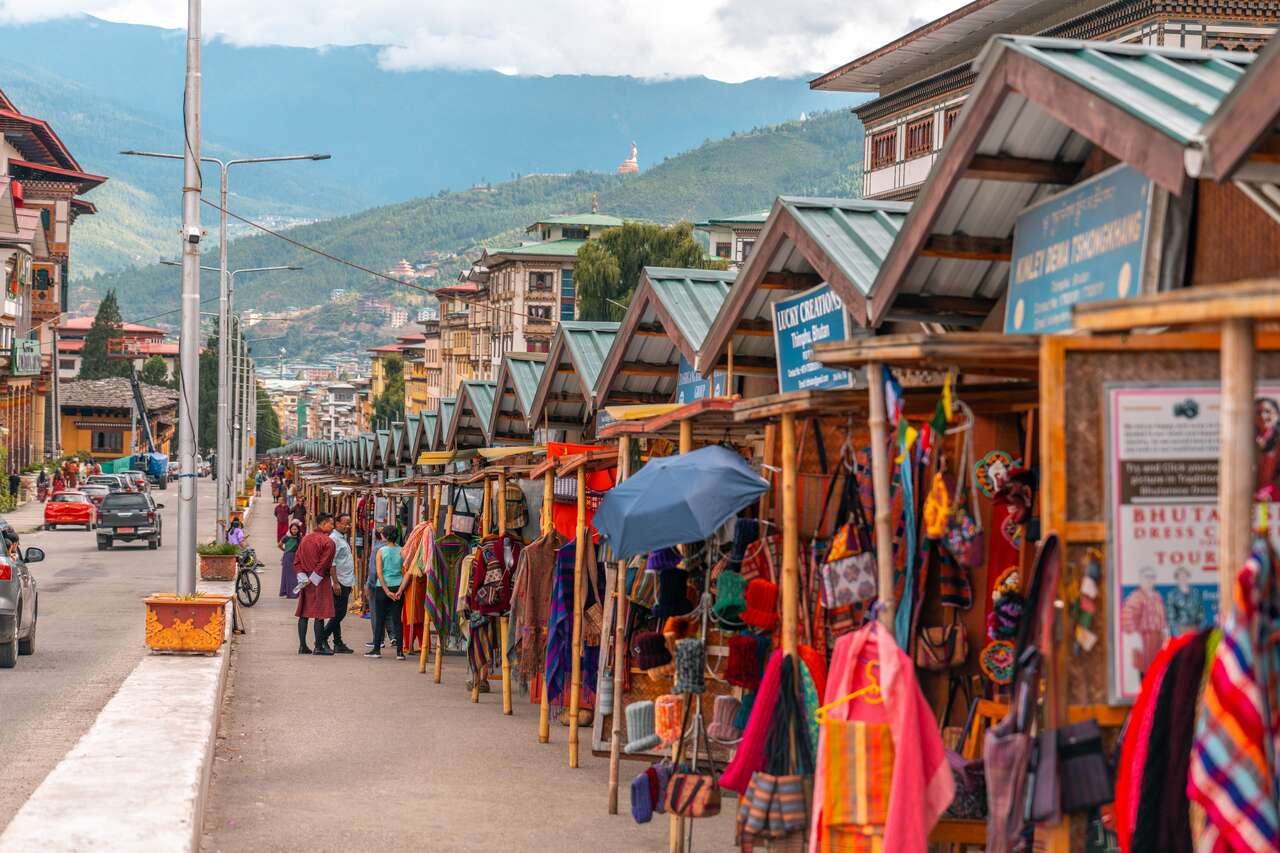
The country’s philosophy of preserving the balance between their natural resources and development may come at a price, but I felt richer for some reason.
At first, the absence of malls, big brands, or glitzy restaurants was unsettling to the city mouse in me. But, like a biker who gets acclimatized upon reaching higher altitudes, I found myself being more present and in the moment than I’d been in months. I guess when you’re not chasing something ‘badly,’ your ability to see the bigger picture expands greatly.
But, what I didn’t see much in Bhutan were traffic signals or loud honking. Instead, I was astonished by how they conducted themselves on the roads. During one of my walks, I saw a car stop for more than two whole minutes, as it waited for pedestrians, mostly old people, to cross the road. I couldn’t help but connect their happy faces to this shared consciousness, which made them so effortlessly mindful of others.
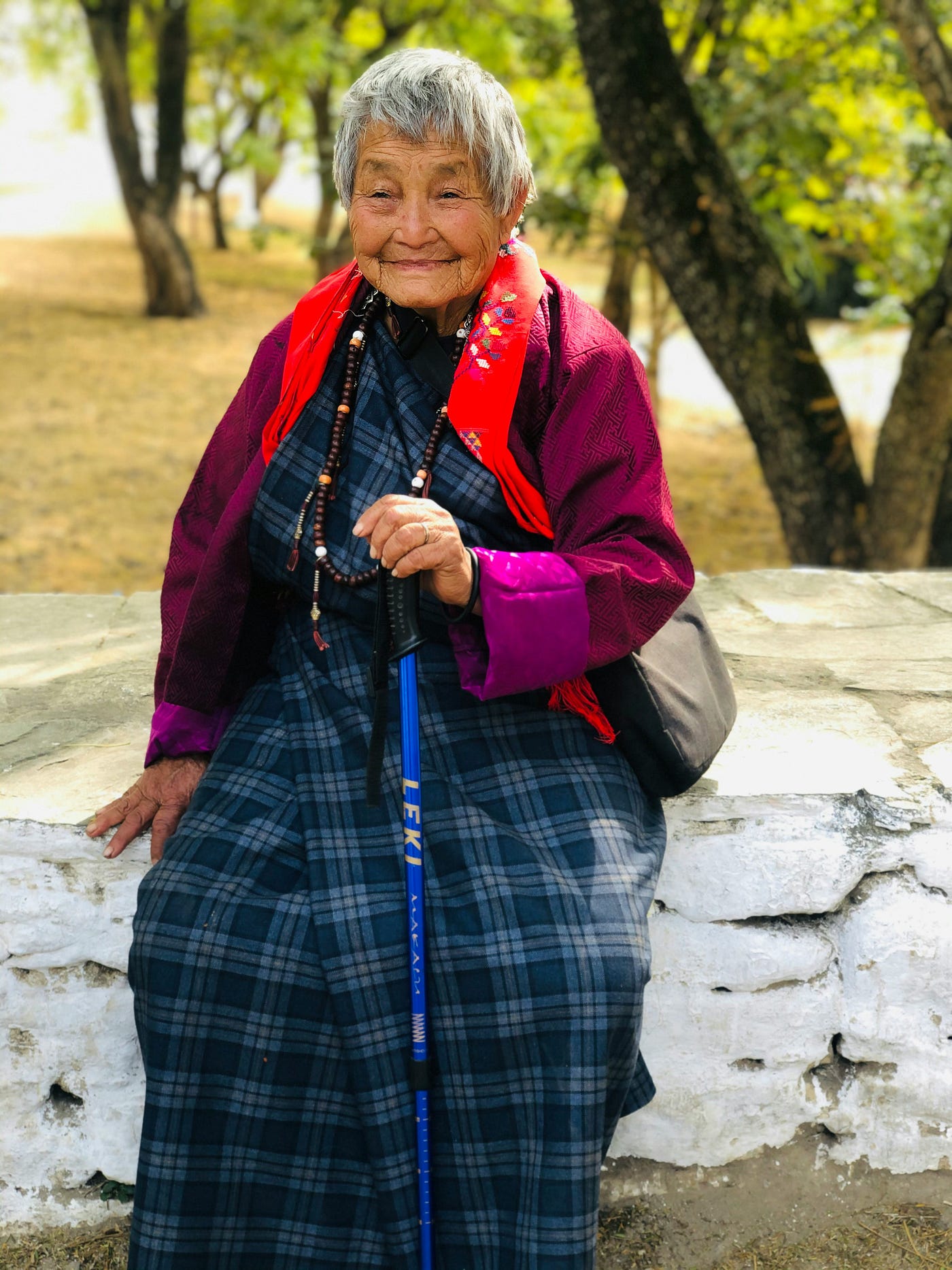
Another manifestation of this shared consciousness was how everyone who passed me by, smiled at me, a freak occurrence in a city like Delhi or Mumbai. At first, I felt a bit awkward smiling at random strangers, but then, as days passed, the thought of not smiling at them felt stranger. I think we constantly deny this shared existence, and stay cooped up in our own mental loop of — my life, my problems, my issues.
I realised why I had felt lighter than air during my trip. It was because I had somehow crawled outside my own skin, and experienced something bigger than me the moment I saw myself being reflected in a stranger’s smile. I felt connected to them, without telling them my life’s updates (crazy, right?).
Balance, aside from a development lens, is a constant thread the people of this tiny country hold on to, making it an underlying philosophy in everything they do.
For them, time is of the essence, and I saw it in their polite-yet-stern way of creating an enviable work-life balance. One evening, we asked our driver to come back at 8 pm and take us around town for dinner. A polite gentleman throughout, he surprised us by saying “Sir, my service timing is from 9 pm to 5 pm. I will come tomorrow at 9 am sharp.”
On another occasion, while taking a stroll in the market area and searching for food options, we decided to try a Korean barbeque place, San Maro. It was a last minute plan, and upon requesting a table, the lady politely denied us entry, saying that the place was fully booked. We learnt that the place only took prior reservations as they prepared their food accordingly. It did hurt us at that moment, but we went there the next day (after placing a reservation beforehand), and the delicious food made up for it.
This attitude of setting boundaries and seeing the larger picture of their life so clearly, is how they maintain not just their country’s sustainability, but also their own mental health. And while we’re surrounded by videos using the phrase ‘Money can’t buy happiness’ with influencers layering their lavish lifestyle over it, scoffing at the idea, I would still like to believe there’s some truth in that.
Why else are we still clicking on articles titled ‘5 daily habits to practice happiness’ on our feed?
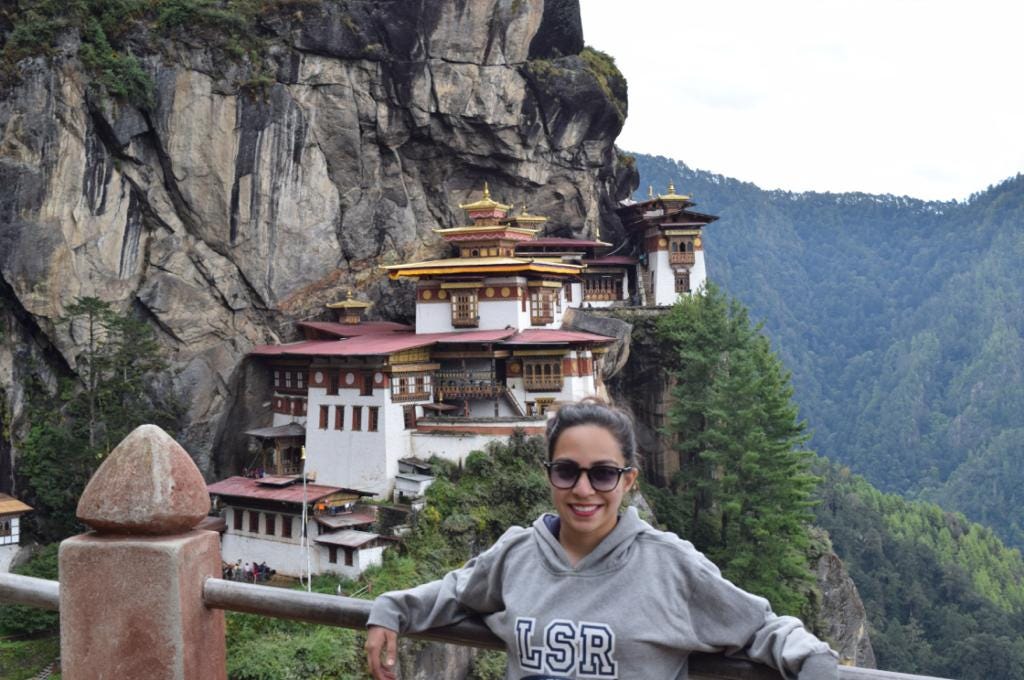
A land of not just dragons, but legends too, Bhutan surprises you in ways you wouldn’t anticipate. On our last day, we did the famous Paro Taktsang or Tiger’s Nest trek, a must-do for everyone. Its legend states that Padmasambhava, one of the prominent spiritual leaders of the country had flown from Tibet to this site, 3210 m above sea level, on a tiger’s back and meditated. The ferocious symbol of a tiger and the peaceful essence of the temple serve as a duality, where peace isn’t possible without a fight.
And this is exactly what our driver, and the lady in San Maro represented in their polite denial of services, for their greater good. Their greater happiness.
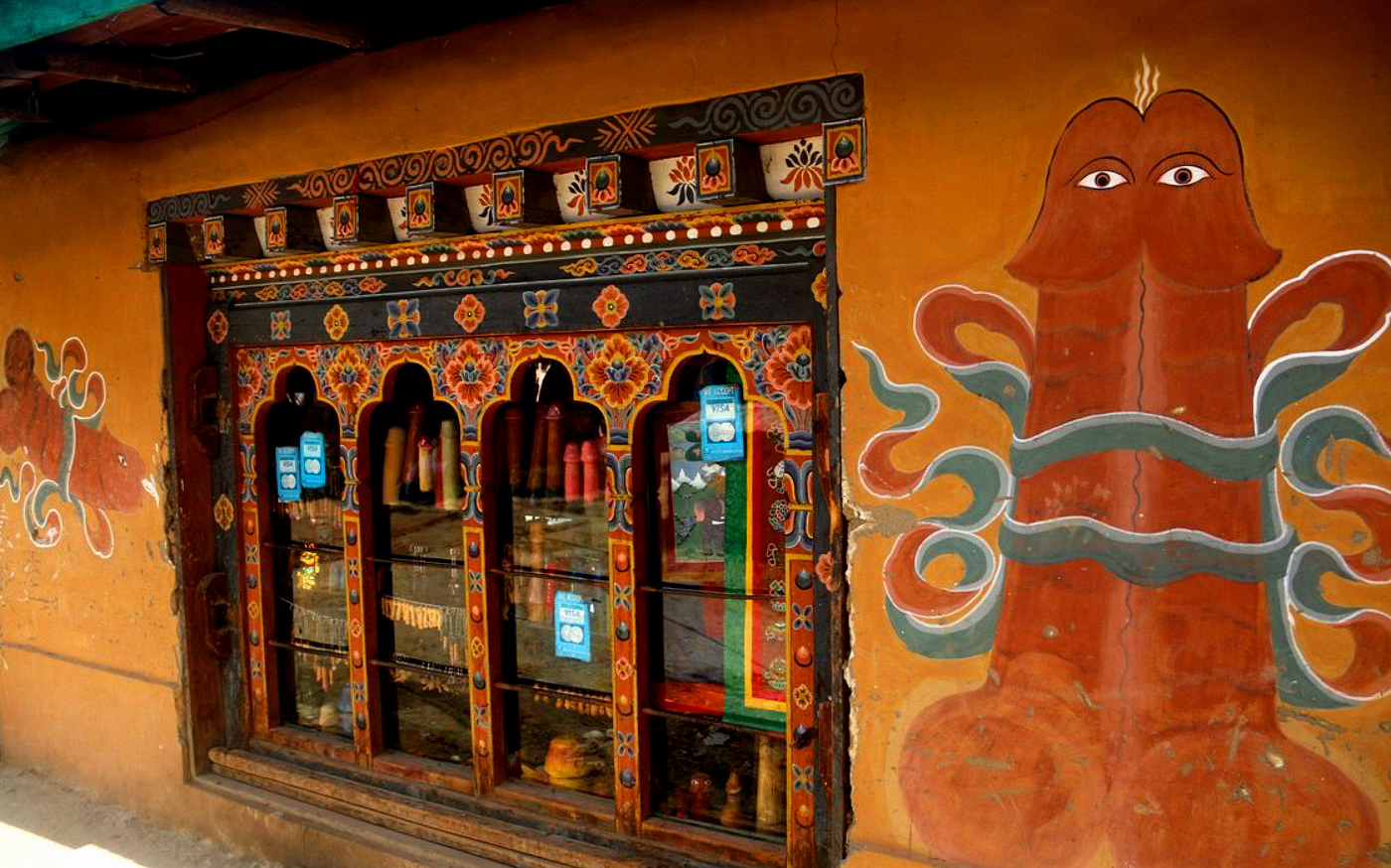
A common sight throughout the trip was of phalluses of various shapes painted on walls and wooden phalluses being sold at souvenir shops. Seemingly strange at first, the locals told us that it is done to ward off evil. Our visit to the Chimi Lhakhang temple shone more light on this mystery. Lam Drukpa Kuenley, an enlightened Buddhist master personified the essence of Vajrayana tradition or ‘crazy wisdom’, whose disregard for norms is symbolised by the phallus. Known as the ‘Divine Madman,’ he is believed to have liberated Buddhists from their cyclic existence.
Needless to say, at the end of the trip, I felt liberated from my limited mind, happy to have touched base with my childhood, and to have realised my connection with everything. Happiness, it turns out, is simply this — a realisation. And if I ever lose sight of it, I know I’m just one flight ticket away from reaching my happy place.
 wanderwomanwrites
Leave a comment